

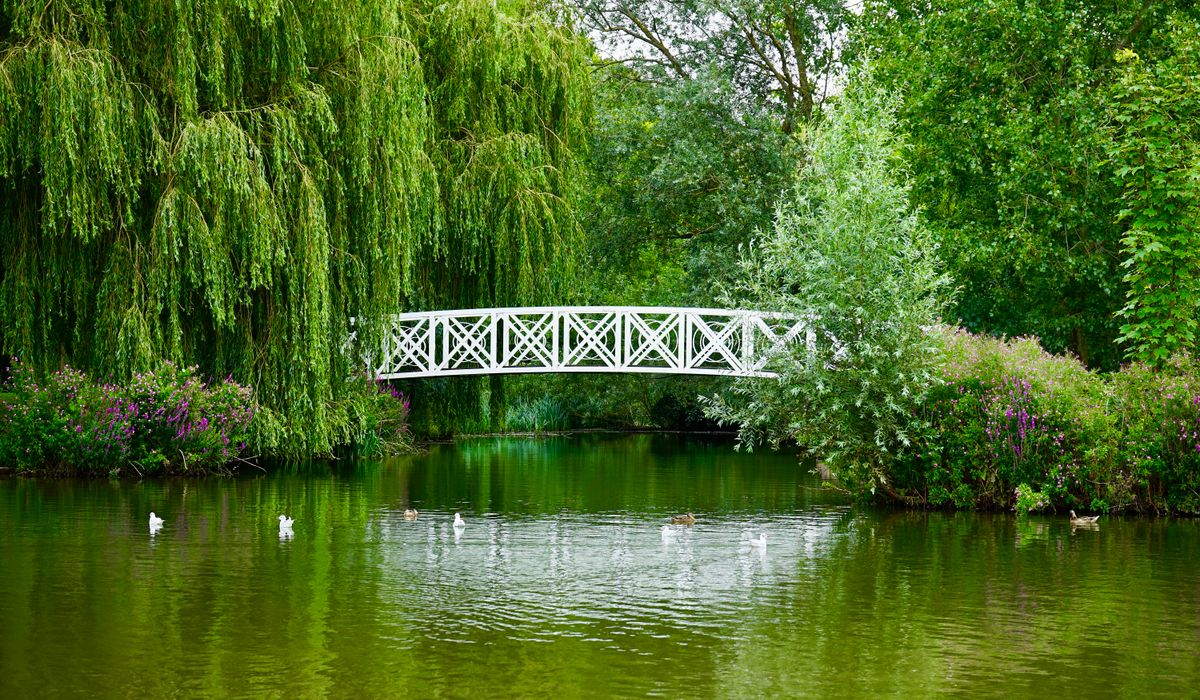
A mature tree is the finest umbrella a garden can offer. Under its canopy the air sits a few degrees cooler, the light turns dappled and green, and the noise of the world seems to drop away. The trick is to make that shade somewhere you actually want to sit, rather than a patch of bare earth you walk past with a watering can. With a little thought about ground, seating, planting and lighting, a corner beneath an old oak or apple tree can become the most-used spot on the whole plot.
Not all shade is the same, and the difference matters enormously. Dappled shade under a birch or rowan, with sun flickering through for part of the day, will grow far more than the deep, dry gloom beneath a mature beech or a dense conifer. Push a trowel into the soil in midsummer: if it comes up damp and dark, you have far more options than if it crumbles away to dust.
Watch the sun for a day or two and note where the first warm patch appears. Even half an hour of morning light changes what will thrive there, and it tells you where to angle a bench. Then look at the roots. The most important rule is never to raise the soil level around a trunk by more than about five centimetres, and never to dig deeply within the drip line — that is, the circle directly beneath the outer branches. Smothering or severing roots does lasting damage, and it is far easier to work around them than to repair the harm.
Gravel is the cottage gardener's quiet ally under trees. It suppresses weeds, drains freely, sounds pleasantly crunchy underfoot, and lets rainwater reach the roots below. Choose a 10–14mm rounded gravel rather than pea shingle, which travels everywhere on wet boots, or large angular stone that is uncomfortable to walk on in thin soles.
If you want a firm surface for furniture, lay a small pad of paving or decking on adjustable feet so nothing is dug into the ground. Two metres by two and a half is plenty for a bench, a small table and a pair of boots. For everything else:
A sturdy wooden bench — oak, teak or a well-painted pine — is hard to beat, and it will silver gracefully if you leave it untreated. Add one or two folding chairs so the gathering can grow, and a small tray table with handles for a teapot, two mugs and a plate of shortbread.
Position the bench with your back to the trunk but just outside the drip line, where the rain will not catch you long after a shower has passed. If you want a swing seat or hammock chair, hang it from a stout, horizontal branch using a wide webbing strap rather than a rope or a screw — straps spread the load and do not wound the bark. Wicker and rattan look lovely but must come indoors or into a lidded box over winter. Store cushions in a waterproof chest nearby, and keep a wool blanket in there too; you will use it more than you expect.
Ferns are the backbone of a shady seating area, and few plants repay the investment so generously. Dryopteris erythrosora unfurls coppery new fronds in spring, Polystichum setiferum is evergreen and utterly reliable, and hart's tongue fern gives upright, glossy strap shapes that catch the light. Plant them in autumn while the soil is warm, and water through the first dry summer.
Around them, build up layers with epimedium, big drifts of Geranium macrorrhizum, brunnera for its forget-me-not flowers, sweet woodruff, lamium and astrantia. Underplant with snowdrops, wood anemones and cyclamen for flowers in the lean months, and mulch everything with leaf mould each autumn. Keep an open, mulched ring around the trunk itself, and leave a few fallen leaves in corners — they feed the soil and shelter the beetles and frogs that keep slugs in check.
Gentle is the watchword. Warm white bulbs of 2200–2700K mimic candlelight, whereas cool white or blue light makes foliage look grey and harsh. Low-level is best: a few solar stake lights along the gravel edge, a string of festoon lights run through the branches on soft straps rather than nails, or a cluster of storm lanterns with real candles for still evenings.
Jam jars wired to a branch and holding a tea light cost almost nothing and look charming. If you want to light the canopy, one small uplighter at the base of the trunk, angled upward and away from the seating, gives a lovely glow without dazzling anyone. Keep any fire bowl or chiminea on the paved area, well clear of overhanging branches, and have a bucket of water within reach.
A sheltered bolt-hole is worth a little maintenance. Cut back tired fern fronds in late winter before the new croziers appear, sweep the gravel in spring, and refresh the membrane where weeds have pushed through. If the corner catches the wind, a hazel hurdle or a low hedge of yew or beech will tame it without blocking the view.
The best thing about a woodland seat is that it comes into its own when the rest of the garden is too hot or too wet. Wrap up, take out a flask, and listen to the rain on the leaves above you. A mature tree, a bench and a few ferns will give you a room outdoors that no conservatory could match.

The Willow Dell Simple, genuine and looked after with care — the kind of place worth returning to.

The Willow Dell Real stories, useful guides and the occasional recommendation, all in one calm corner of the web.

Clean tools work better and last longer. Use a file or sharpening stone at the correct angle, then oil metal parts to prevent rust over winter.

Comments
ALina Kelian
19th May 2018 ReplyThe Willow Dell No rushing, no fuss — just thoughtful notes and practical help, written by people who care. ullamco laboris nisi ut aliquip ex ea commodo consequat.
Rlex Kelian
19th May 2018 ReplyThe Willow Dell Simple, genuine and looked after with care — the kind of place worth returning to. ullamco laboris nisi ut aliquip commodo.
Roboto Alex
21th May 2018 ReplyThe Willow Dell We spend our time finding what works so you don't have to, and sharing exactly what made the difference. ullamco laboris nisi ut aliquip ex ea commodo consequat.