

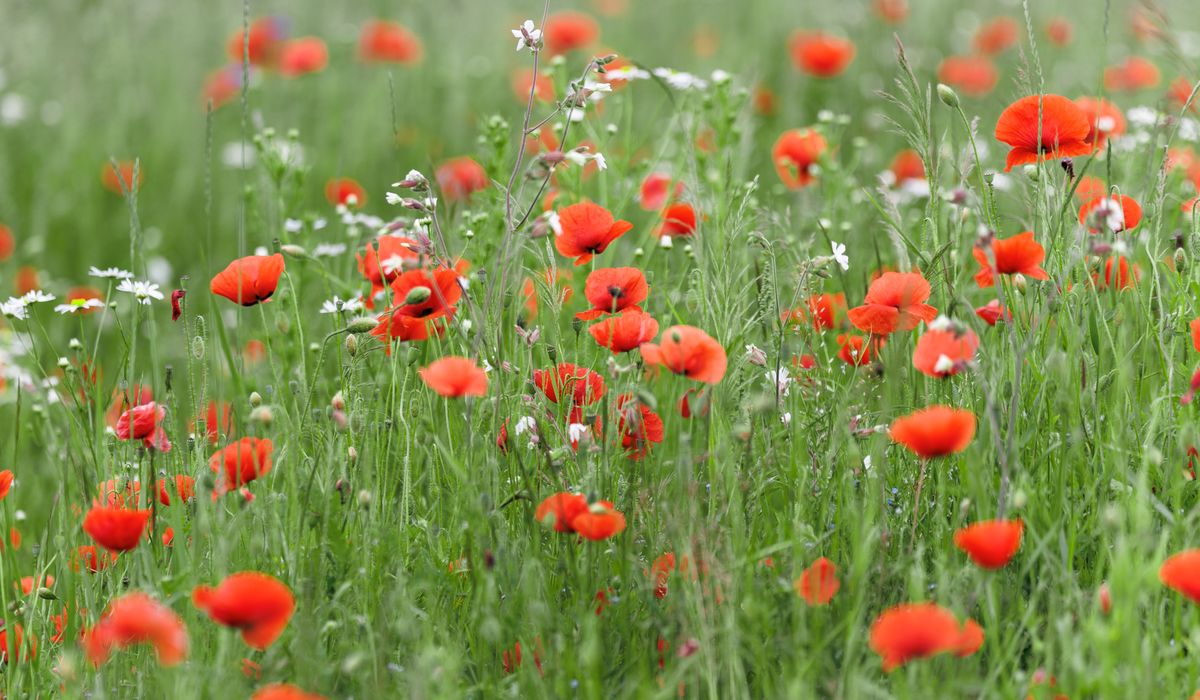
A wildflower meadow in a modest back garden is not a scruffy patch of unmown grass. It is a managed habitat, and once it is up and running it asks less of you than a lawn. The rewards are disproportionate: a few square metres of native flowers will pull in bees, butterflies, hoverflies and moths from a surprising distance. Even a strip two metres wide along a fence, or a roughly circular bed of three by four metres, can work beautifully. The key is to stop thinking like a gardener and start thinking like a hay meadow farmer.
Most garden soil is far too fertile for wildflowers. Feed them and the grasses and broad-leaved weeds will romp away, leaving your flowers swamped. Wildflower meadows thrive on thin, hungry ground, so the first job is to reduce fertility rather than add to it.
Yellow rattle is the meadow-maker. It is a semi-parasitic annual that taps into grass roots and weakens them, opening gaps for flowers to establish. Without it, most small meadows slowly revert to grass. Sow it in autumn, ideally September or October, because the seed needs winter cold to germinate. Scatter it thinly on the surface and rake it in lightly — it needs contact with the soil but not deep burial.
Alongside yellow rattle, choose reliable, colourful natives. Ox-eye daisy gives you that classic white daisy look in early summer. Common knapweed follows with purple, thistle-like flowers that bees adore. Add bird's-foot trefoil, field scabious, meadow buttercup, yarrow and selfheal for a longer season.
Mowing is not the enemy of a meadow — it is the management. Traditional hay meadows are cut once a year, usually in late July or August after the flowers have set seed. The cut is then removed as hay, which takes nutrients away and keeps the soil poor. In a garden, you are mimicking that with a mower and a rake.
If you want a tidier edge, mow a narrow border around the meadow. It frames the wildness and shows neighbours that the patch is deliberate.
Some gardens are simply too rich, and stripping topsoil is not always practical. In that case, grow your meadow in a raised bed or large container filled with a mix of subsoil, sharp sand and a little garden soil. Choose a shallow container — thirty centimetres deep is plenty — because wildflowers put their energy into flowers rather than roots. Yellow rattle, ox-eye daisy and knapweed all grow happily this way. Water only in the first summer while plants establish, then let the rain do the rest.
A wildflower meadow is not a static feature. It changes week by week, and that is part of its charm. In spring you will see the first yellow rattle seedlings and the rosettes of knapweed. In June the ox-eye daisies open, followed by knapweed in July and a second flush of colour into August. Leave the seedheads standing into winter and you will feed goldfinches and shelter overwintering insects.
The most common mistake is being too tidy. Do not cut everything back in autumn, do not weed out the yellow rattle, and do not worry if the grass looks long and rough in July. Let it go. The reward is a small, buzzing, changing patch of countryside outside your back door — and all it really asks is poor soil, a late summer cut, and a little patience.

The Willow Dell Simple, genuine and looked after with care — the kind of place worth returning to.

The Willow Dell Real stories, useful guides and the occasional recommendation, all in one calm corner of the web.

Cottage gardens mix perennials, annuals and climbers for informal abundance. Plan for spring bulbs, summer roses and autumn asters to keep borders interesting.

Comments
ALina Kelian
19th May 2018 ReplyThe Willow Dell No rushing, no fuss — just thoughtful notes and practical help, written by people who care. ullamco laboris nisi ut aliquip ex ea commodo consequat.
Rlex Kelian
19th May 2018 ReplyThe Willow Dell Simple, genuine and looked after with care — the kind of place worth returning to. ullamco laboris nisi ut aliquip commodo.
Roboto Alex
21th May 2018 ReplyThe Willow Dell We spend our time finding what works so you don't have to, and sharing exactly what made the difference. ullamco laboris nisi ut aliquip ex ea commodo consequat.