

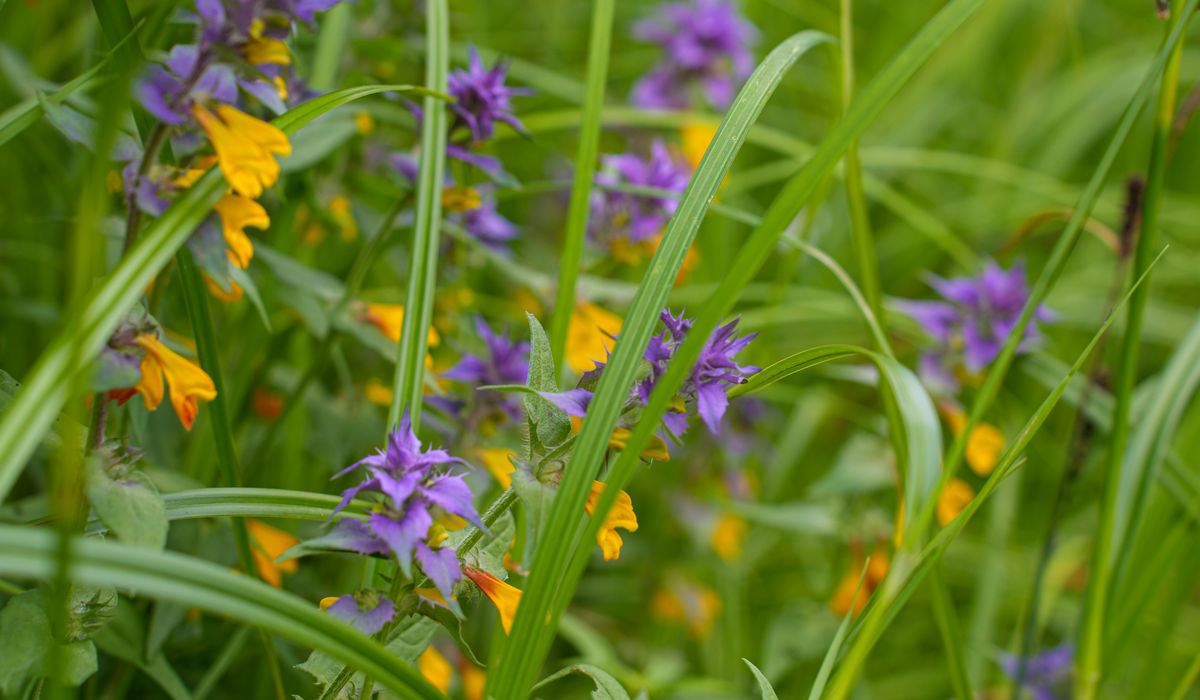
Cottage gardening is less about a rigid design and more about a relaxed, generous spirit. The classic picture — foxgloves leaning over a stone path, roses scrambling through an arch, self-seeded nigella filling the gaps — comes from plants being allowed to mingle rather than being marshalled into neat blocks. That informal abundance is the whole point, but it does not happen by accident. Behind every tumbling border is a plan, even if the plan is simply "something in flower for as much of the year as possible".
The trick for a small UK plot is to build your borders around three layers: bulbs and early perennials for spring, roses, climbers and hardy annuals for summer, and asters, sedums and grasses for autumn. Get that skeleton right and the garden will feel full from February through to the first hard frost, with very little bare earth on show.
Before you plant a single perennial, spend a weekend on the ground itself. Cottage gardens are hungry, flowering-heavy places and they reward good preparation. Fork over the border to a spade's depth, work in two or three barrows of well-rotted manure or garden compost per square metre, and remove perennial weeds properly. Bindweed and ground elder will ruin the relaxed look faster than any design mistake.
Next, decide on the bones: paths, edges and any vertical structure. In a rural setting you may already have a hedge, a drystone wall or a rusty estate fence to work with. If not, add a simple gravel path with a planted edge, a couple of obelisks, and one wooden arch. These give climbers something to climb and stop the planting from becoming an undifferentiated mass.
Spring is where cottage gardens earn their keep, because the bulbs go in months earlier when the border still looks half-empty. Plant drifts of daffodils and tulips in October and November, roughly three times their own depth, and scatter them rather than lining them up. Narcissus 'Thalia' and Tulipa 'Queen of Night' both naturalise well and mix beautifully with forget-me-nots.
Underplant with wallflowers, forget-me-nots and pulmonaria, and let honesty and sweet rocket seed themselves into the gaps. Pulmonaria is particularly useful in a shady rural garden, flowering in March when little else will. Hellebores are worth every penny for a position under deciduous shrubs, where their nodding flowers last for weeks.
By late April the tulips take over, and then — crucially — you let the foliage die down naturally for six weeks before cutting it. That is what feeds next year's display. Hide the yellowing leaves behind emerging perennials such as hardy geraniums and alchemilla.
Summer belongs to the rose. Choose shrub roses with good scent and repeat flowering — Rosa 'Gertrude Jekyll', 'Munstead Wood' or the wonderfully tough Rosa gallica 'Complicata' — and give them room. Cottage gardens do not prune roses into tight shapes; they let them flop a little over paths and through neighbours.
Climbers are what turn a flat border into a proper cottage scene. Train a clematis through an apple tree or over a shed door, run a jasmine or honeysuckle along a fence, and let a climbing rose mingle with both. The classic combination of Clematis viticella 'Étoile Violette' with a pale rose is hard to beat and flowers from July into September.
Fill the middle ground with hardy geraniums, catmint, salvias and penstemons, and let annuals do the improvisation:
The commonest mistake in a cottage border is running out of steam in September. Plan for it now. Asters (many now sold as Symphyotrichum) are the backbone of autumn colour, with 'Little Carlow' and 'Monch' giving weeks of blue-purple daisies that bees adore. Pair them with sedum 'Herbstfreude', whose flat pink heads turn bronze as the weather cools.
Add heleniums in hot rust and gold, rudbeckia for a long season of dark-eyed flowers, and one or two ornamental grasses such as Molinia or Stipa tenuissima to catch the low light and move in the wind. Leave the seedheads standing through winter — they feed the birds, look superb in frost and give the border structure when everything else has collapsed.
A cottage garden should feel generous, not effortful. A few habits keep it that way. Mulch borders each spring with compost to suppress weeds and feed the soil. Cut perennials back in stages rather than all at once, leaving some seedheads for wildlife. Lift and divide crowded clumps every three or four years, and be ruthless about plants that bully their neighbours.
Above all, allow a little self-seeding. The happiest cottage gardens are the ones where aquilegia, verbena and poppies have been allowed to find their own places. You are not designing a show garden; you are making a place that looks loved, lived in and alive with colour from the first snowdrop to the last aster.

The Willow Dell Simple, genuine and looked after with care — the kind of place worth returning to.

The Willow Dell Real stories, useful guides and the occasional recommendation, all in one calm corner of the web.

Lavender hates wet roots, so add grit to heavy soil and plant on a slight mound. Prune after flowering, but avoid cutting into old woody stems.

Comments
ALina Kelian
19th May 2018 ReplyThe Willow Dell No rushing, no fuss — just thoughtful notes and practical help, written by people who care. ullamco laboris nisi ut aliquip ex ea commodo consequat.
Rlex Kelian
19th May 2018 ReplyThe Willow Dell Simple, genuine and looked after with care — the kind of place worth returning to. ullamco laboris nisi ut aliquip commodo.
Roboto Alex
21th May 2018 ReplyThe Willow Dell We spend our time finding what works so you don't have to, and sharing exactly what made the difference. ullamco laboris nisi ut aliquip ex ea commodo consequat.